Why Is My House Humid Even With the AC Running
High indoor humidity with the AC on is more common than you think. Here are the most likely causes and how to fix them.

Jordan Ellis
High indoor humidity with the air conditioning running is one of the more frustrating comfort problems a homeowner can experience. The AC is on, the temperature is reasonable, but the air feels heavy and uncomfortable. Surfaces feel slightly damp. The house smells musty. Nothing feels quite right.
The good news is that this problem almost always has a specific cause, and most of those causes are fixable. Here is what's likely going on and what to do about it.
Why air conditioning should reduce humidity
Dehumidification is a natural byproduct of how air conditioning works. As warm air passes over the cold evaporator coil, moisture in the air condenses on the coil surface the same way moisture forms on a cold glass in summer. That condensed water drips into the drain pan and exits through the condensate drain line.
A properly functioning, properly sized AC system running in normal conditions should maintain indoor relative humidity between 40 and 55 percent. If yours isn't, something in that process is breaking down.
The system is oversized for the space
This is the most common cause of high indoor humidity and the one most people don't expect. An oversized AC system cools the air so quickly that it reaches the set temperature before it has had enough time to remove adequate moisture. The system shuts off, the space is cool but still humid, and the cycle repeats.
This is called short cycling. The system runs in short bursts, the house feels cold and clammy, and humidity stays elevated because the system never runs long enough to do the dehumidification work.
Oversizing is a design problem, not a maintenance problem. It happens when a system is selected based on square footage alone without accounting for insulation levels, window placement, ceiling height, and other factors that affect the actual cooling load. The fix is either replacing the system with a correctly sized one or adding dedicated dehumidification capacity.
The evaporator coil is dirty
A dirty evaporator coil is less effective at both cooling and dehumidification. The layer of dirt acts as insulation between the coil surface and the air passing over it, which reduces heat and moisture transfer. The system runs longer and removes less humidity per hour of operation.
Cleaning the evaporator coil is part of a standard maintenance visit. If your system hasn't been serviced recently, this is a likely contributor and an easy fix.
Refrigerant levels are low
Low refrigerant means the evaporator coil doesn't get as cold as it should. A warmer coil is less effective at condensing moisture from the air. The system may still cool the space adequately in mild conditions, but dehumidification suffers noticeably.
Low refrigerant always means there is a leak somewhere in the system. Simply adding refrigerant without finding and repairing the leak is a temporary fix that will require repeating. A technician needs to locate the leak, repair it, and then recharge the system to the correct level.
The system is too old
Older systems lose efficiency and dehumidification capacity over time as components wear and the system operates further and further from its original specifications. If your system is 15 years old or more and struggling with humidity, age may be a contributing factor alongside whatever specific issue is present.
Air is leaking into the home
If your home has significant air leaks, humid outdoor air is constantly infiltrating the space and overwhelming the system's dehumidification capacity. Common entry points include gaps around windows and doors, unsealed penetrations in the building envelope, and poorly sealed duct systems that draw unconditioned air from attics or crawl spaces into the return air stream.
A home that's losing conditioned air through leaks in the duct system is also pulling unconditioned air from unconditioned spaces. That air is often significantly more humid than the air the system is trying to maintain, and the system simply can't keep up.
The thermostat fan is set to on instead of auto
This is a simple one that's easy to overlook. When the thermostat fan setting is set to on rather than auto, the blower runs continuously even when the system isn't actively cooling. When the system is in the off part of its cycle, the moisture that condensed on the evaporator coil and collected in the drain pan gets blown back into the air stream. The system is effectively re-humidifying the space between cooling cycles.
Switching the fan setting from on to auto costs nothing and can make a noticeable difference in indoor humidity levels.
When to consider a dedicated dehumidifier
If the system is correctly sized, properly maintained, and operating normally but humidity is still a persistent problem, a whole-home dehumidifier may be the right solution. These units integrate with your existing HVAC system and provide dedicated moisture removal independent of the cooling cycle.
They're particularly effective in climates with very high outdoor humidity, in homes with significant air leakage that's difficult to fully address, and in situations where the cooling load is low but the humidity load is high, such as during mild but humid weather in spring and fall when the AC doesn't run frequently enough to manage moisture on its own.
What to do next
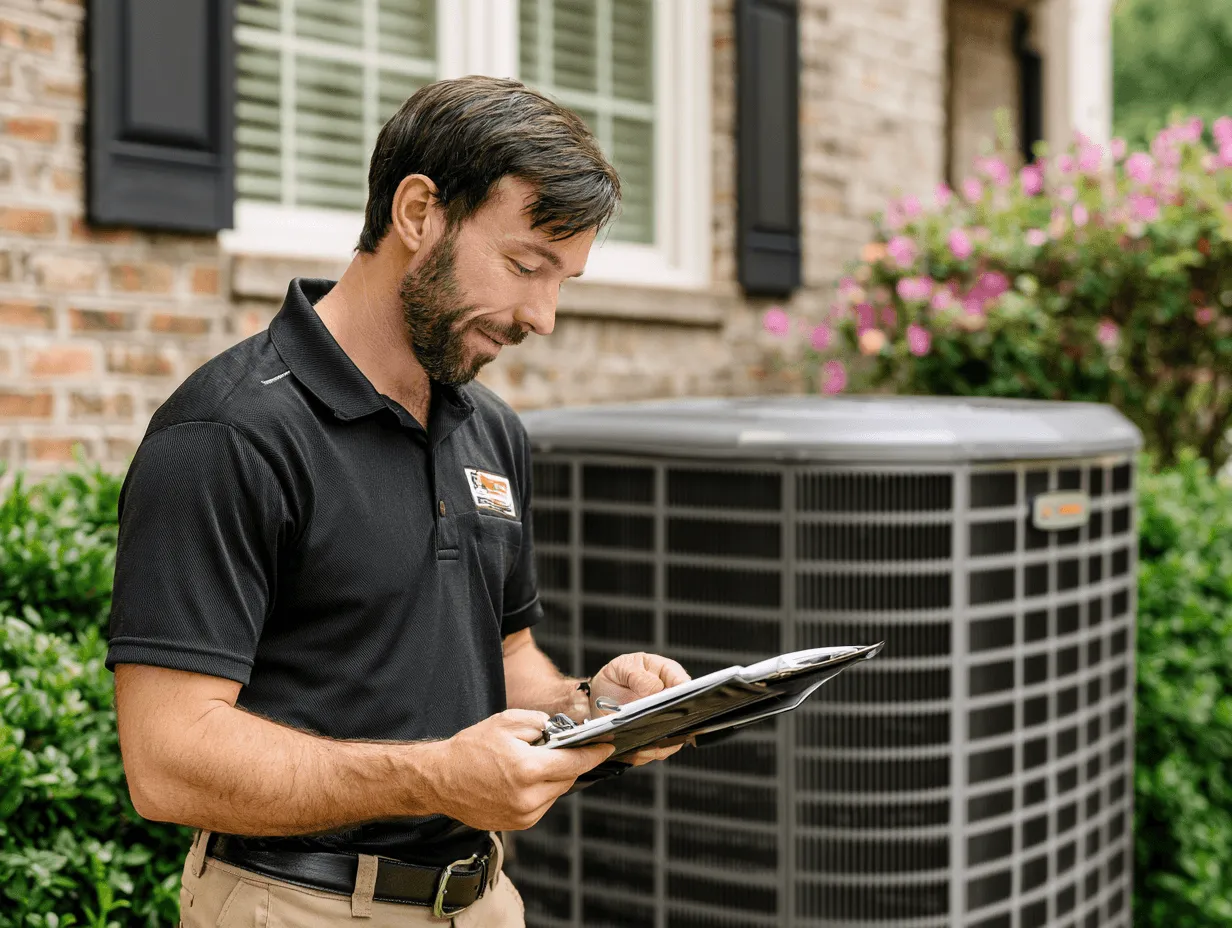
If your home is humid with the AC running, start with the basics. Check the thermostat fan setting. Check the filter. If you haven't had the system serviced recently, schedule a maintenance visit. A technician can check refrigerant levels, inspect the coil, verify airflow, and give you an accurate picture of what's contributing to the problem.
Humidity problems are solvable. The key is identifying the actual cause rather than assuming and addressing the wrong thing.